June 25, 2026 · 5 min read
How Many Steps a Day? What the Research Says (It Isn't 10,000)
10,000 came from a pedometer, not a study. Mortality benefit levels off around 7,500 — and the biggest single gain was going from 2,718 to 4,363 steps. Pace stopped mattering once volume was accounted for.
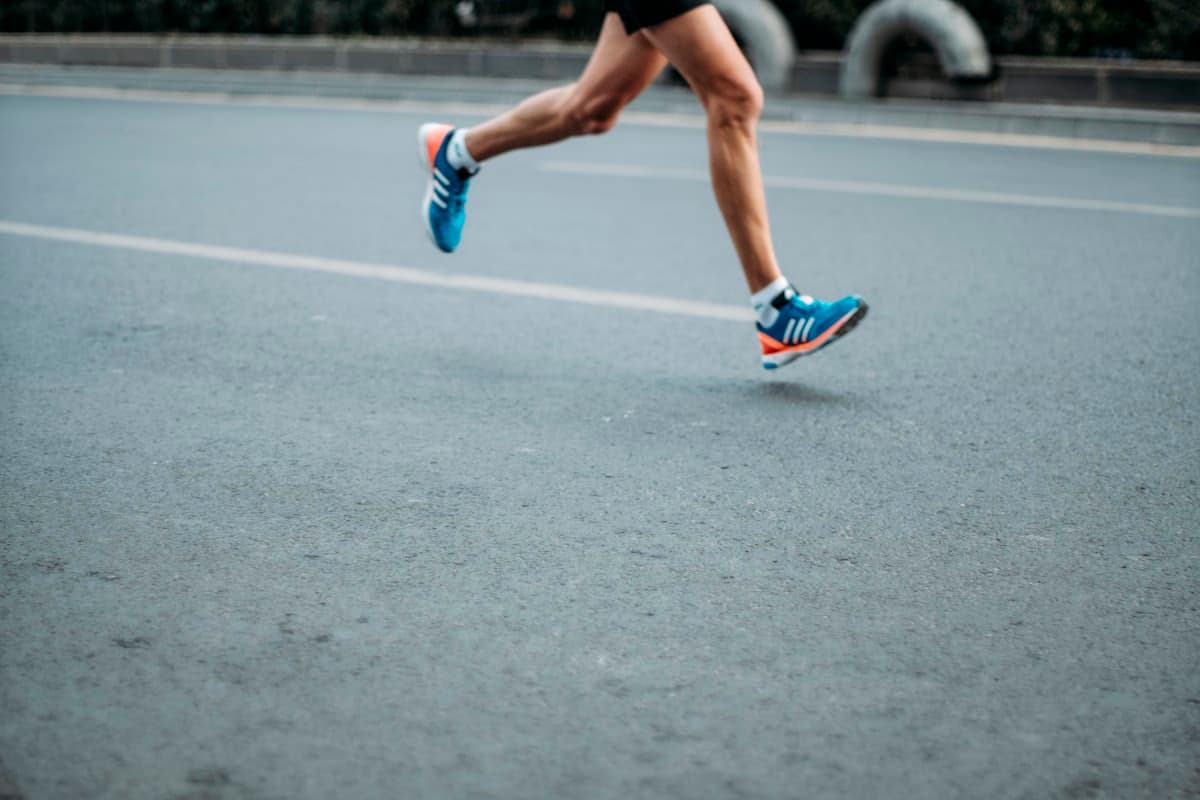
If you have ever finished a day on 6,800 steps and felt you had failed, the number you failed against was not a research finding. It came from a pedometer.
Here is what the studies actually report — and it is considerably kinder than the target on your wrist.
Is 10,000 steps a real target?
Not one the mortality research supports. In a study of 16,741 women (mean age 72) published in JAMA Internal Medicine, hazard ratios "decline progressively with higher mean steps per day until approximately 7500 steps/d, after which they leveled."
A larger meta-analysis makes the same shape clearer across ages. Pooling 15 cohorts and 47,471 adults in Lancet Public Health (Paluch et al., 2022), the risk of early death levelled off at roughly 6,000–8,000 steps a day for adults aged 60 and over, and roughly 8,000–10,000 for those under 60.
So there is a ceiling, it depends on your age, and for a lot of people it sits well below the round number everyone quotes. Steps beyond the plateau are not harmful — they simply stop buying what the first few thousand bought.
Where does the benefit actually come from?
The bottom of the range, by a distance. This is the finding worth internalising, and it is the opposite of how step goals are usually framed.
In the JAMA study, median steps across quartiles were 2,718, 4,363, 5,905 and 8,442. The adjusted hazard ratios were 1.00, 0.59, 0.54 and 0.42.
Look at the size of the first jump. Going from roughly 2,700 steps to roughly 4,400 — about twenty minutes of walking — was associated with a hazard ratio of 0.59. Going from there to 8,442, nearly double again, moved it to 0.42. The first increment did most of the work.
That reframes the whole exercise. The valuable move is not getting from 9,000 to 10,000. It is not spending the day at 2,700, which is what a desk, a car and a lift will produce without anyone deciding to be sedentary.
Does walking faster help?
Apparently not, once you account for how much you walk. The JAMA paper looked at stepping intensity directly and found that "higher intensities were associated with significantly lower mortality rates; however, after adjusting for steps per day, all associations were attenuated, and most were no longer significant."
In other words the brisk walkers did better mainly because brisk walkers take more steps. Strip that out and the pace itself stopped mattering in this data.
That is unusually good news for anyone who cannot walk quickly — because of age, joints, breathlessness, or pushing a pram. The thing being measured is accumulation, not effort.
What should a reminder actually do, then?
Prompt movement during the day, not a rescue mission at the end of it.
The common failure is checking the tracker at 9pm, discovering a shortfall of several thousand, and either doing a joyless forced march or writing the day off. Both are worse than the alternative, which is three or four small prompts spread across the hours when you are most likely to be sitting still.
- Mid-morning and mid-afternoon. The two reliably sedentary stretches for anyone at a desk. Five minutes each, and you have moved the number more than an evening sprint would.
- One anchored to something you already do. After lunch, after the school run, after a particular meeting. An anchor survives a changed schedule; a bare time does not.
- Not a step-count readout. A reminder that says "you are 4,000 short" is a reminder to feel bad. One that says "walk round the block" is a reminder to walk round the block.
In ReminderIt you can set these by message — "remind me at 11am and 3pm on weekdays to get up and walk" — and it reads the schedule back before saving. Two or three prompts is the right number: this is a low-stakes, easily-ignored task, and over-reminding it trains you to ignore reminders generally.
What the research does not say
That any of this is a personalised prescription. The JAMA cohort was older women, mean age 72, so it does not straightforwardly describe a 30-year-old man; the meta-analysis covers a broader range, which is why both are quoted here rather than one.
Both are observational. They show associations between step counts and mortality, adjusted for confounders, not proof that adding steps causes the benefit. People who walk more differ from people who walk less in ways no adjustment fully captures.
And none of it speaks to your situation. If you have a heart or lung condition, a recent injury, or anything that makes movement risky, the number that matters is the one your clinician gives you, not one from a cohort study. This page is about what the reminder should do, not about what your body needs.
What survives all the caveats is worth keeping: the ceiling is lower than the folklore, the first few thousand steps do most of the work, and speed is not the variable. If the tracker's target has been making you feel like you are failing, it was never measuring what you thought it was.
Sources: Lee I-M, et al. Association of Step Volume and Intensity With All-Cause Mortality in Older Women, JAMA Internal Medicine 2019;179(8):1105–1112. Paluch AE, et al. Daily steps and all-cause mortality: a meta-analysis of 15 international cohorts, Lancet Public Health 2022.
Put it to work
Filed under Habits & routines — browse all topics.
Related articles
Reminders that actually reach you
Text ReminderIt on WhatsApp. At the moment that matters you get the reminder on WhatsApp and as a real phone call. 7 days free, no card.
New to call-based reminders? Read the complete guide to reminders that actually work or see pricing.